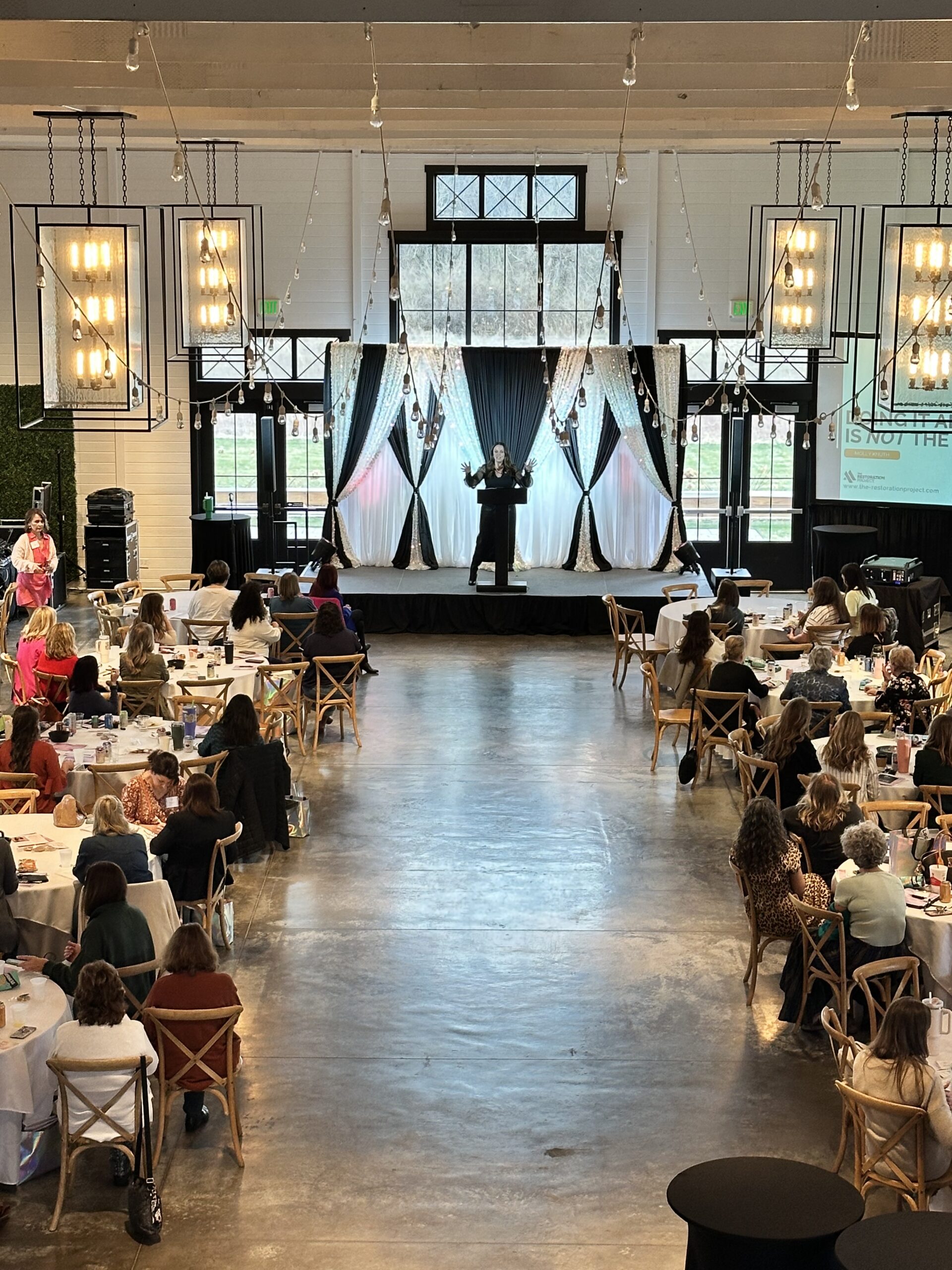
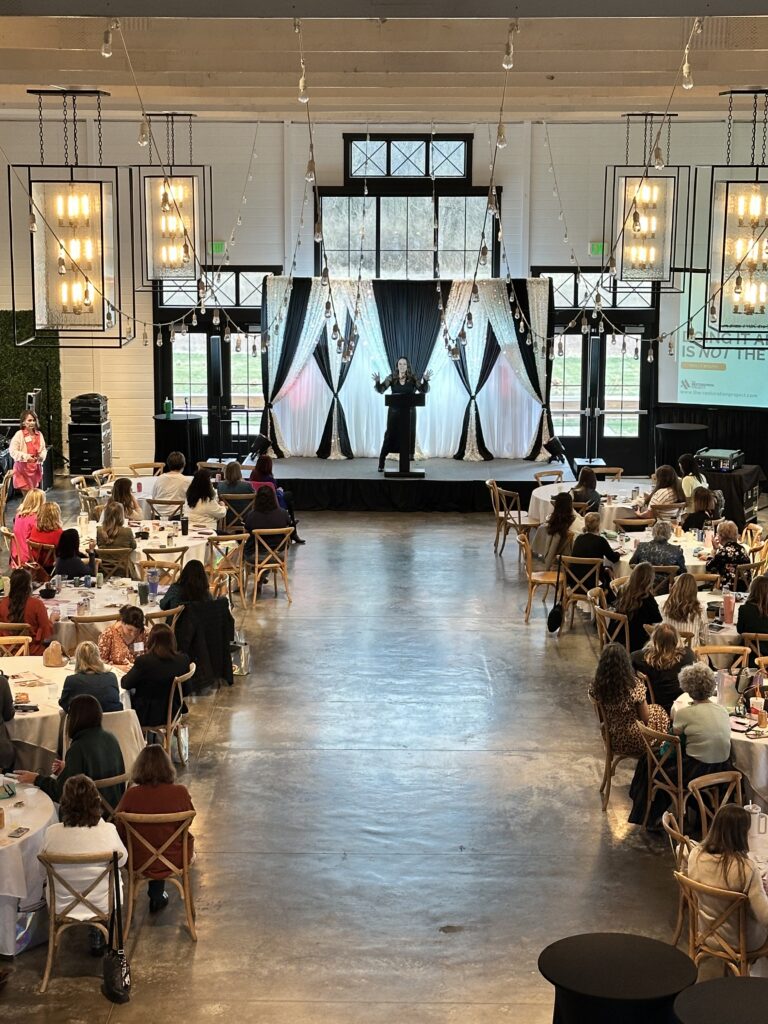
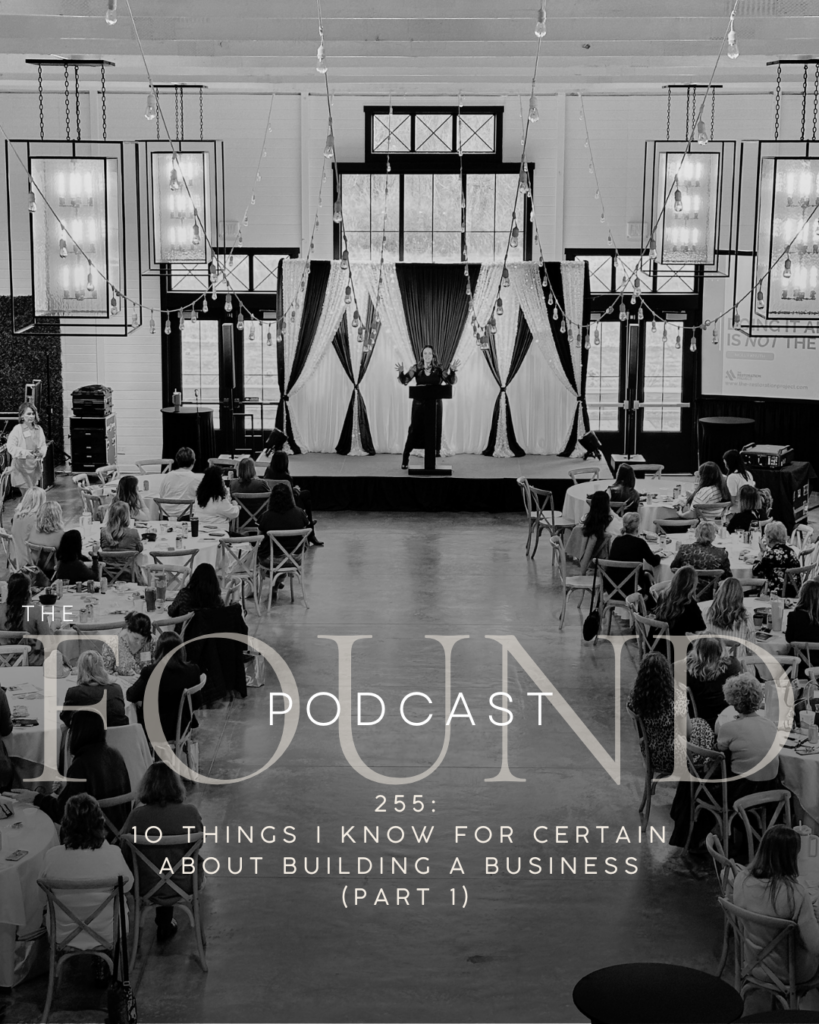
I was the 3:00 PM speaker at the You Conferences in Cedar Rapids this past March. For those of you who have never attended a full-day women’s conference, the 3:00 slot is a particular kind of challenge. Everyone’s heads are full. The snack table has been picked over. Half the room is doing the mental math on pickup times and dinner and whether there’s anything defrosted at home.
I knew going in that I needed to do something to shift the energy. I had a plan. I had coordinated with the sound guys. And then, somewhere between arriving that morning and taking the stage that afternoon, I scrapped the plan and did something I had not done since… well, ever, professionally speaking.
I grabbed the handheld mic, stepped off the stage, told the women to dance, and karaoked “I Will Survive.”
It was fun. It was memorable. It got filmed. But more than any of that, it was the moment I realized I had been not trusting myself for a long time. Since stepping into a new identity as “Molly the leadership developer,” I had been second-guessing whether I knew what my audience needed, whether my instincts were right, whether I had earned the right to take up space in this new version of myself.
That 3:00 PM slot cracked something open. And it sent me straight here, to share with you 10 things I know for certain about building a business.
Not from books.
Not from a course I took.
From living it, for almost a decade, in real time.
This is Part 1. Five lessons today, five more next week.
Lesson 1: You Don’t Need to Reinvent the Wheel at the Beginning
When someone comes to me with a new business idea, I can feel the energy. The vision. The “this is going to be different” electricity that lives in the early days of building something. And I love that. I want to protect that.
But one of the most common things I see in brand new business owners (and I absolutely did this myself) is the urge to not just bring something great to market, but to also build it in some brand new, never-been-done way. And here’s what I want to say about that: let the thing itself be what’s different. Let you be what’s different. You don’t also have to reinvent how to run a business.
The foundation is genuinely unsexy, and it genuinely works. Here’s what you actually need to get started:
- File your LLC with your secretary of state. Do it yourself online or with a trusted attorney. It protects you and your business.
- Set up three business bank accounts: a checking account for income and expenses, a savings account, and a separate tax savings account. Every dollar has a job.
- A way to send invoices and receive payments. It can be QuickBooks, it can be a Canva invoice and a Venmo. Start simple.
- A contract, especially if you’re a service provider. Something that spells out the scope of work.
- A business email. Even a Gmail works when you’re starting out.
That’s it. Start there. Grow from there. The fancy tools and the advanced platforms can come later, and they will mean a lot more once you actually have clients to use them with.
Lesson 2: Slow Down. Then Go Even Slower. But Don’t Stop Moving.
I need to relearn this one roughly every quarter, so I say it with full humility.
Studies show that people overestimate what they can accomplish in a day and underestimate what they can do in a year. I have lived this truth in both directions. Back in 2020 and 2021, I was operating like my hair was on fire. Stress-y eye twitches. Couldn’t sleep. Had committed to so many things with so little runway that “good” wasn’t even on the table, just “done.”
The projects and the work I’m most proud of? We gave them room to breathe.
My rule now: take whatever timeframe you think something will take, and double it. Yes, it pushes out the delivery window. Yes, it might push out the paycheck. But it gives your work a chance to actually be good. It gives you space to think, to adjust, to not be white-knuckling every deadline.
Slowing down also has a surprising side effect: it kills the shiny object problem. When you have a real plan, backwards-mapped with breathing room and blocked into your calendar, you are a lot less likely to get derailed by the next interesting thing that crosses your path. You already know what you’re working on. You know where your time and energy belong.
Moving slowly isn’t the same as not moving. It’s choosing to do things fully instead of just fast.

Lesson 3: Your Story Is Your Edge
You don’t need the most novel business model. You don’t need the most unique offer in the market. What you need is the story behind why you’re doing this, because that is the thing nobody else can replicate.
Think about it: back in 2017, everyone was offering social media marketing. But I was doing it from a home office in rural Iowa with four kids around me, talking about it openly, showing the reality of it. That was a different thing than what an agency could provide. That specificity, that humanity, that story is what made people choose me.
Your story is what anchors people into your mission. It’s what makes your offer feel different even when the category feels crowded. It’s what people remember long after they’ve forgotten your pricing page or your service list.
And the good news is you already have it. You have pivotal moments that led you here. You have challenges you navigated and unexpected wins you didn’t see coming and people who shaped how you think about the work. Those stories live in your social captions, your emails, your website copy, your conversations at networking events, your podcast appearances.
Find the two or three stories that trace the arc from who you were to who you are today, the person who started this thing. Write them out. Get clear on the key players, the turning point, the lesson. And then use them. Everywhere. Often. Without apology.
Your story creates fans before it ever creates customers. Lead with it.
Lesson 4: Selling Isn’t Yucky. Talk About Your Offers.
I am going to say something that makes a lot of people uncomfortable: you need to talk about what you sell until you are absolutely blue in the face.
I worked with Lindsy at Chilled Freezer Meals from 2023 to 2025. She had been in business since 2018. We talked about her membership options constantly. On social media, in emails, on the website, in videos. Every month. With extra emphasis in January and before back-to-school season.
And still, I would talk to people who would say: “I didn’t know she offered a membership.”
Every single time. Without fail.
That is not a failure of the marketing. That is just how it works. There are always people in your orbit who have not yet heard what you do. And you are not serving them by staying quiet about it.
Earlier this year I sent cold outreach emails (well, warm-ish… people who knew of me but didn’t know me yet) to fill my empowerment communities. Small group coaching containers, five months, six to eight women focused on leading themselves and their teams better. I put out a couple of social posts and didn’t get much traction, so I identified women I genuinely wanted to work with and sent personal invitations. Hey, here’s what we’re doing. Here’s what it looks like. No pressure, but I’d love to have you.
About 40 to 50 emails. And just this morning I sat down with six incredible women to talk about AI for small businesses, celebrate each other’s wins, and make plans for our in-person closing session.
That doesn’t happen if I don’t send the email.
Selling doesn’t have to feel pushy or slimy. It can feel like an invitation. But you have to make it. Ask for the sale. Name your price. Send the email. Own how your work makes people’s lives better. That’s not gross. That’s just good business.
Lesson 5: You’ll Only Make as Much Money as You’ve Built Capacity For
In 2016, before I had even filed my LLC, I was doing some early client work and someone asked me my rate. I had been a teacher. I had been a stay-at-home mom. I had no framework for this.
“Um… $15 an hour?”
They said yes immediately. And I thought I was really making it.
A year later I moved to a retainer model and set my first rate at $225 a month. This included three to five posts a week, all the copy, content strategy, monthly reporting, regular meetings… all before Canva existed. I cringe a little telling that story. But I also want to hug that version of me, because putting that number out there at all took real courage. It felt terrifying.
The number is so different now. But here’s the thing: just a few weeks ago I was on a call with my coach Katrina working through what my rates need to look like to hit my goals, and I still got that pit in my stomach when we landed on the number. She asked me how I felt about it. I told her honestly. And she said, “That’s great. Are you going to charge it?”
Same conversation. Different number. Same nervous system response.
What I’ve learned is that your price is the ceiling you set for yourself. And you are the only one who can raise it. Nobody is going to come to you and say, “Please, can I just pay you more?” You have to run the numbers. You have to know what you need. You have to build, slowly and intentionally, the value, the reputation, the skills, and the belief that your work is worth what you’re asking for.
I didn’t get here by luck. I got here by building capacity for it, one price increase at a time.
Part 2 is coming next week, and we’re picking up with lessons six through ten. Make sure you’re subscribed so you don’t miss it. And if this one landed for you, share it with a business owner in your life who needed to hear it today.

Be the first to comment