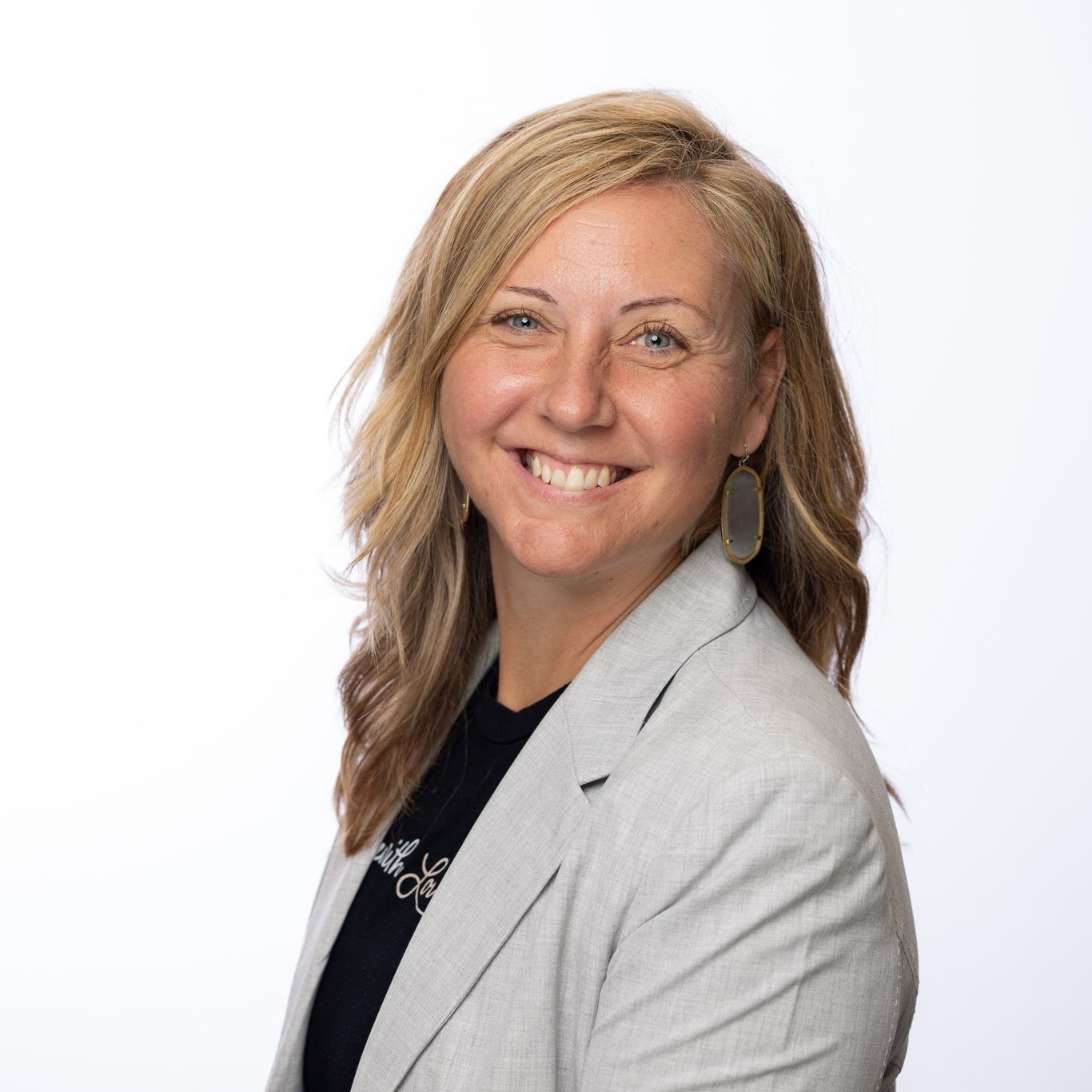
I have known Brooke Fitzgerald for years. I’ve watched her close a business, rebuild herself from the inside out, step into one of the most compelling coaching practices in our region, and now as of June 1, 2026 take the helm of The Restoration Project as its sole owner.
And every single time I sit across from her and press record, she says something that makes me put my pen down and just…listen.
Episode 253 was no different. This is Brooke’s third time on the Found Podcast (click here for the first episode she guested on and here for the second), and I think it might be her best yet because she came in with the kind of clarity that only comes from doing the real work. Not the highlight reel. The actual, messy, years-long work of figuring out who you are when you strip away everything you’ve been doing.
The Coffee Shop, the Closing, and the Lowest Point
If you know Brooke, you know her energy. She fills a room. You feel her before she says a word. But for years, Brooke was known in the Cedar Rapids community primarily as one thing: the owner of The Early Bird coffee shop.
And when that chapter ended and she closed the doors in early 2020, it wasn’t just a business closing. It was an identity unraveling.
“I wasn’t the energy builder. I wasn’t Brooke,” she told me. “I was a coffee shop owner, and Brooke in the community.” The lowest point of her life, she said. And the beginning of everything.
What I love about the way Brooke tells this story is that she doesn’t skip the hard parts. She doesn’t clean it up for the audience. She talks about owing money to the bank, about the gap between how things looked from the outside and how they felt on the inside, about how many cups of coffee you have to sell at $2.25 to make payroll, the imposter syndrome of being the face of a “failed” business. She keeps it real, and that realness is exactly what makes her so effective at helping other people through their own versions of it.
Who Are You When You’re Not the What?
The first step in Brooke’s untethering process wasn’t a framework or a tool. It was a question she sat with for a long time: who am I?
Not what do I do. Not what am I good at. At least not yet.
Just: who am I?
She’s honest that it took a while to answer. That there’s no pill, no quick exercise, no algorithm shortcut. That it requires time and space and quiet, and that the answers, when they finally surface, are easy to dismiss. She thought her ability to energize a room was nothing special. She genuinely thought everyone could do it. Imposter syndrome at its finest.
This is such an important part of the conversation for me, because I think so many of us have done exactly that: minimized the things that come naturally to us precisely because they come naturally. If it’s easy for me, it must not be that valuable. If I’ve always been this way, it probably doesn’t count.
It counts. It counts so much.
The Path to Enough: Why Enough Is a Decision, Not an Amount
One of the cornerstones of Brooke’s work (and one of the frameworks I find myself coming back to) is what she calls the Path to Enough. And the foundation of it is this: enough is not an amount. It’s a decision. And that decision belongs to you.
When we let other people set the bar, whether that’s our parents, our bosses, social media, the culture of achievement we were raised in, we are guaranteed to fall short. The bar will always move. There will always be more. And we will run ourselves into the ground chasing a finish line that was never ours to begin with.
Brooke walked through three things she learned on her own enoughness journey.
First: figure out who’s holding the bar, and take it back.
Second: detach your worth from how much you do, and align with who you are being in the doing.
Third — and this is the one that made a room of 100 women go silent when I watched Brooke facilitate it in January — ask yourself: who are you when no one needs anything from you?
People stopped. They looked at each other. They teared up. Because so many of us have never once been asked to consider who we are outside of our usefulness to others. If you don’t have an answer to that question, Brooke says, that’s where you start.
Good Enough Is Good Enough (Yes, Really)
Here’s the thing that gets gasps in Brooke’s workshops every single time: good enough is good enough.
Research and anecdote alike tell us that men will raise their hand at 50% readiness and feel confident. Women wait until they’re at 100%, and even then, they’re second-guessing themselves. That pesky imposter syndrome again.
The result? Overwhelm. Burnout. A constant low hum of not enough that has nothing to do with reality and everything to do with a bar set for us by someone else’s standards.
Sustainable, peaceful, fulfilled leadership cannot coexist with the demand that we give everything, all the time, to everything. Brooke talks about glass balls and rubber balls: not everything that feels urgent is actually fragile. Some things bounce. And part of the work is getting honest about which is which.
From Imposter to Intentional: The SEA Tool
Imposter syndrome came up in this conversation in a way I hadn’t heard framed before. Brooke describes it as a pesky bird on your shoulder: that loud, noisy narrative that shows up at the table and whispers that you don’t belong, that you got lucky, that someone else is more qualified, that you don’t have enough time or experience or credentials to raise your hand.
But here’s the reframe: imposter syndrome is your courage catching up to your capability. It shows up when you’re growing. When you’re stepping into something bigger. It’s not a sign you’re in the wrong place. It might actually be a sign you’re in exactly the right one.
To move from imposter syndrome to intentional leader, Brooke uses what she calls the SEA tool. When the noisy narrative shows up, you ask: What’s the Story my ego is telling me? Show me the Evidence that story is true. What’s the intentional Action I can take?
She shared a story about a female CEO who had just wrapped a major national initiative, was receiving recognition from peers across the country, and sat down across from Brooke and said: “I just got lucky.” Brooke looked at her and said: show me the evidence that’s true. The woman burst into tears. Because she couldn’t. Because it wasn’t true. Because no one had ever asked her to prove the story her ego had been selling her.
That’s the work. That right there.
What’s Next for Brooke and The Restoration Project
As of June 1st, Brooke steps into sole ownership of The Restoration Project, and she was refreshingly honest about what that transition feels like. The excitement, yes. But also the unfamiliar quiet of no longer having a partner to bounce ideas off. The imposter bird chirping a little louder than usual. The very frameworks she teaches getting stress-tested in real time.
She’s building this next chapter around her priorities. Her boys, Connor and Henry, are at the center. She’s creating a practice that can flex with the seasons of her life rather than consuming all of them. There’s a lot coming this fall: women’s retreats, small group Empowerment Communities focused on the Power of No, and a November workshop on The Path to Enough at the Indian Creek Nature Center in Cedar Rapids, Iowa.
If you’re local and you’ve been wanting to experience Brooke in a room: this is your giant flashing neon sign pointing you to her website. Head there for links to everything, including the MWLN Summit in Muscatine this June.
Connect with Brooke
Find Brooke and The Restoration Project at the-restorationproject.com or connect with her on LinkedIn. She is the real deal, and getting to share her with this community, again, for the third time, never gets old.

Be the first to comment