Ed Raber has a name badge from Staples. It cost him eight dollars sometime in the 1990s, and he has worn some version of it to nearly every meeting, coffee shop, and parade in Eastern Iowa ever since.
It sounds like a small thing. It is not a small thing. It is, as Ed puts it, his secret sauce.

An Introvert Who Plays an Extrovert for Money
Ed is the Director of Planning and Development for Dubuque County, and if you ask him what that job actually involves, he’ll tell you it’s a little bit of everything: policy, zoning, subdivisions, farm ground, and a whole lot of people trying to figure out how their community works.
But underneath the job title is something more specific. Ed is a connector. Not a service provider (he’ll tell you flat out, do not ask him to help with your pro forma), but a person who has spent decades learning who knows who, and why that matters.
He’ll also tell you he’s an introvert who plays an extrovert for money. Which might be the most honest description of small town leadership I’ve ever heard.
You don’t have to be the loudest person in the room. You just have to be willing to be in the room.
What Makes Dubuque County Different
Before Dubuque County, Ed spent years as a community and transportation planner working with small towns across five eastern Iowa counties, then decades running a nonprofit economic development organization in Washington County. He says it took him a third of his time there just narrowing down and naming what made the place special. He spent the rest of it telling everyone.
Dubuque County, it turns out, is its own kind of unusual. Nearly 19,000 people live out in the unincorporated area, more than the entire population of some neighboring counties. It’s one of only three counties in Iowa with that kind of rural density, alongside Polk and Johnson. That creates a mix of farmland, residential development, and small business that most of the state doesn’t have to think about, and it means Ed’s job is as much about translation as it is about policy. Helping people understand what’s true here, and why what works somewhere else might not work the same way at home.

No Wrong Door
The phrase Ed keeps coming back to is “no wrong door.” It’s the idea that a healthy community, whether it’s a rural county or a small downtown, is one where it doesn’t matter who you ask for help. Somebody will know somebody. You need an attorney, a lender, a CPA, and if the person in front of you doesn’t know one, they should at least know who does.
Ed has watched this play out through 1 Million Cups, an initiative he helped bring to Dubuque in May of 2025. No pitch decks, no dues, no RSVP. Just a room, a speaker, coffee before and after, and forty or so people who showed up because they were craving connection they weren’t finding anywhere else. It’s not magic. It’s just consistency, and a place low enough stakes that people are willing to walk in.

The Meeting That Started With a Cup of Coffee
Ask Ed how the Farley library and community center project got its start, and he won’t point to a grant application or a strategic plan. He’ll tell you he was sitting in a coffee shop, and somebody he knew walked in, and they started talking. That conversation turned into the first meeting at Farley City Hall. That meeting turned into a library and community center.
It’s the same story with the downtown revitalization conversations happening now. High traffic places, an open door, and someone willing to ask the next question. Ed has built an entire career on exactly that pattern, and he’s quick to point out it isn’t reserved for people with his job title. Anybody can be one of the doors.
Stick With It
When I asked Ed what he’s found out about himself along the way, he didn’t talk about strategy or credentials. He talked about a conversation he had early in his career with a few pastors, who told him that if you want to make a difference, you have to stick with it. Not hop from place to place chasing the next thing, but stay long enough to see it through.
Ed took that seriously. He’s watched companies choose Washington County over other places simply because he was willing to schedule one more meeting after everyone else had given up. He’s watched a downtown come back to life because a small group of people refused to stop showing up. Thirty years later, he still can’t point to a shortcut. Just the name badge, the coffee shop, and the willingness to stay in the room a little longer than everybody else.
Find Ed, and Find Your Own Door
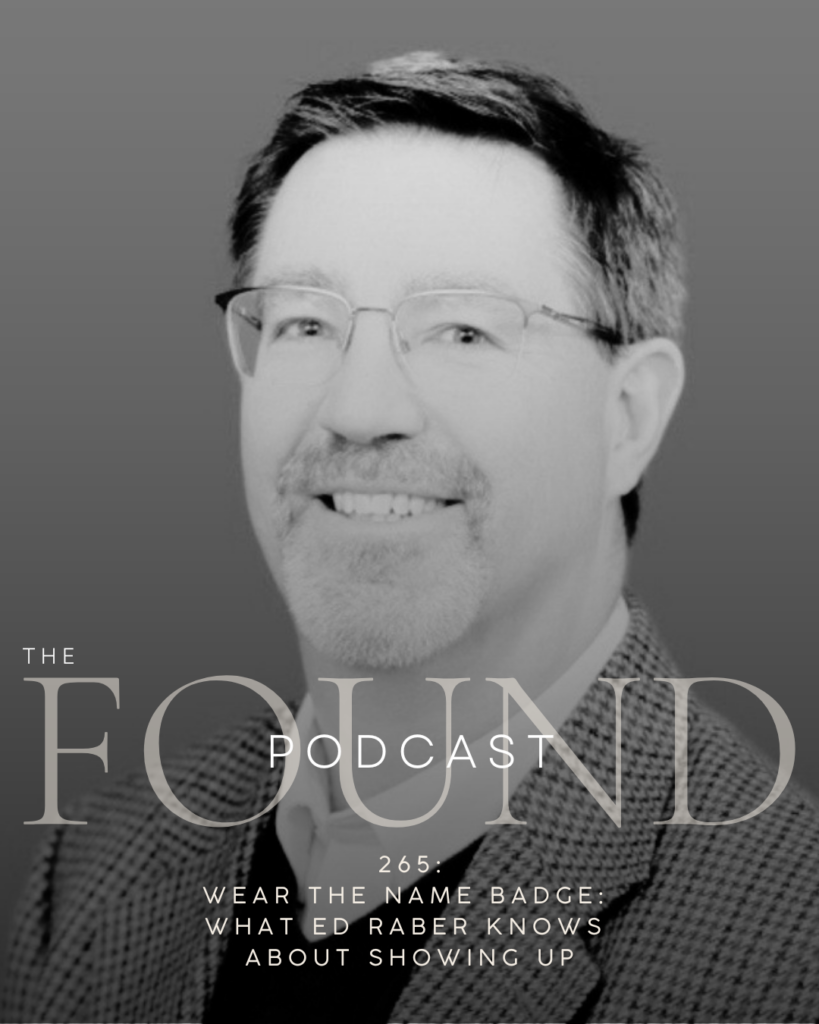
Ed is easy to find. LinkedIn, Facebook, Instagram, or just search his name and you’ll land on his email. He curates thousands of connections across Iowa and the Midwest, and he means it when he says he’s happy to be a door for somebody else.
So here’s the resonance prompt for this one: Where have you been waiting for permission to show up? What’s the coffee shop, the meeting, the name badge moment you’ve been putting off?
You don’t need a title to be one of the doors. You just need to go.

Be the first to comment