



I open a lot of pitches from prospective podcast guests each day in my inbox. Most of them I file away or decline, not because the people or the work aren’t interesting, but because there are only so many episodes and so many stories that can fit on one podcast.
This one I responded to before I even finished reading it.
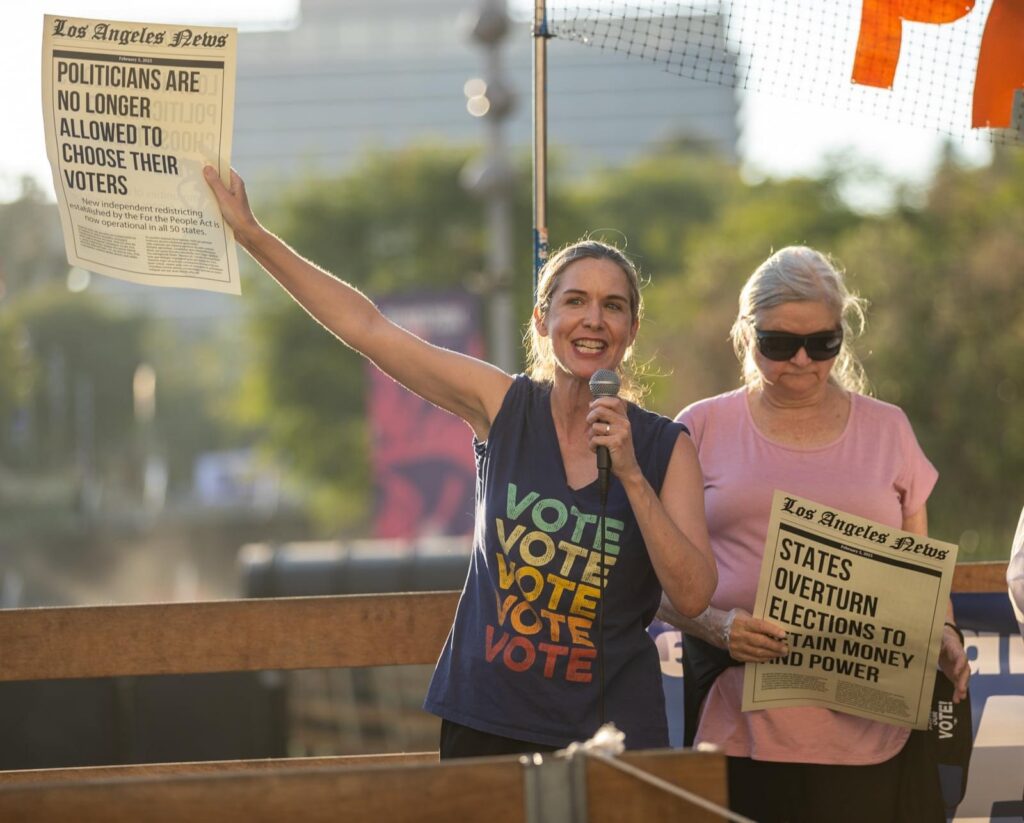
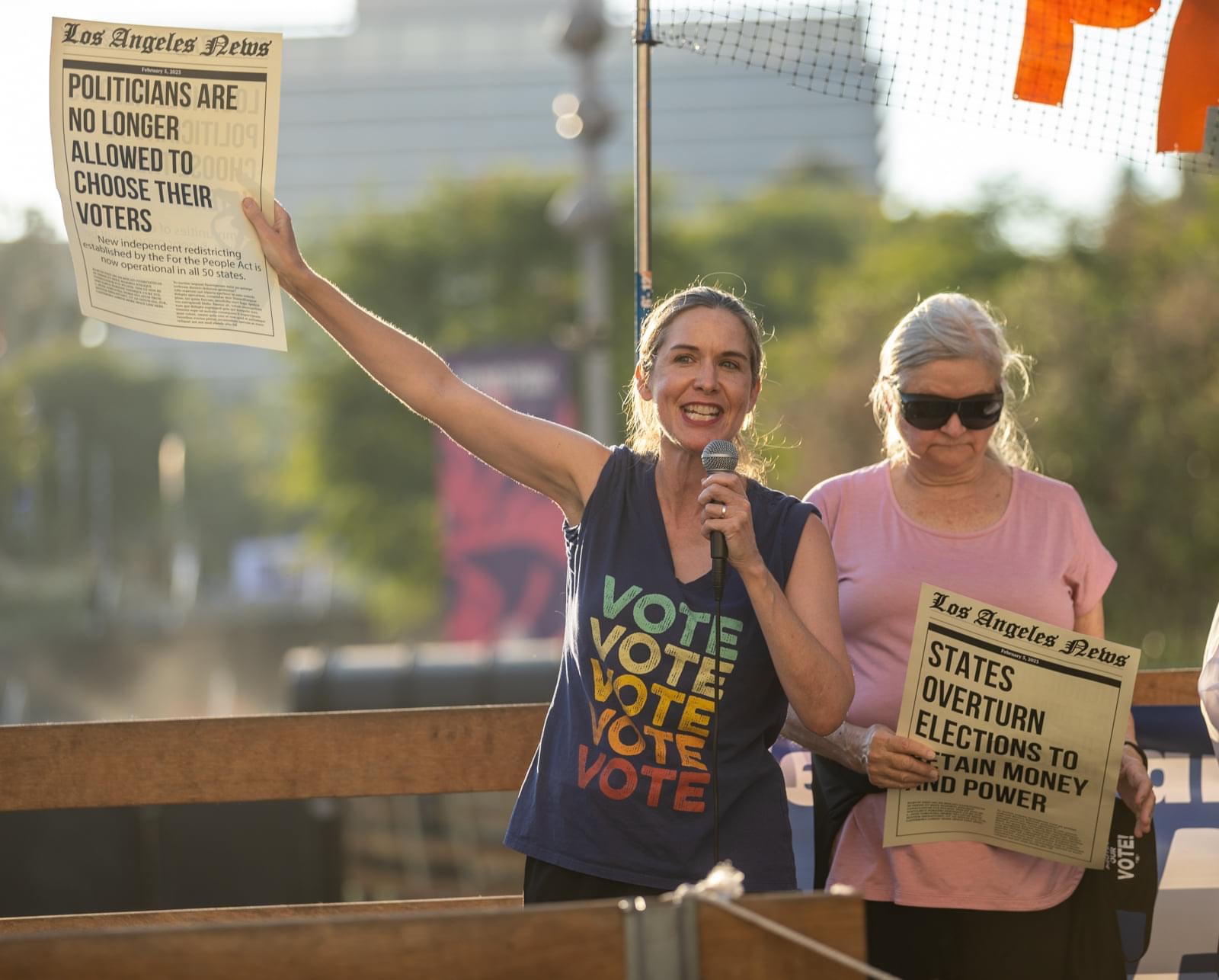
Sarah Jakle is the founder and executive director of DemocraShe, a nonpartisan nonprofit offering free online training to high school girls in resiliency skills, leadership, and civic engagement. Built by young women for young women. Peer-led. Paid. And doing something about one of the most glaring gaps in American democracy.
Right now in 2026, 28% of Congress is women. 11% is women of color.
Sarah thinks that starts changing in high school. And she and her organization are building the program to prove it.
The Gap She Saw, and What Nobody Was Addressing
Sarah came to this work through an unusual path: a master’s in public policy, a master’s in social work focused on how brains overcome extreme adversity, work in homeless services, and then a pivot into political work in 2016. She became the Get Out the Vote director for the California National Organization for Women and the national outreach director for Field Team 6.
From inside that work, two things became undeniable.
First: women, even brilliant, accomplished, credentialed women, had significant difficulty seeing themselves as candidates. Men with the same resume were twice as likely to consider running. Women were far more likely to say: it’s not my turn, it’s not my time.
Men were more likely to think: I was considering governor.
Second: when women did step up and say they wanted to serve, they faced up to 10 times more bullying and harassment than male candidates.
You cannot solve one without the other. You cannot grow the number of women in office simply by encouraging women to run, if the system shreds them when they try.
So Sarah came out of 2020 with a different question: what if we started earlier? What if we got to girls in high school, the last time boys and girls believe equally that they can run for office, and built something there?
DemocraShe was the answer.

Built by the Girls, for the Girls
The first thing Sarah did was refuse to build the program without the input of the people it was designed to serve.
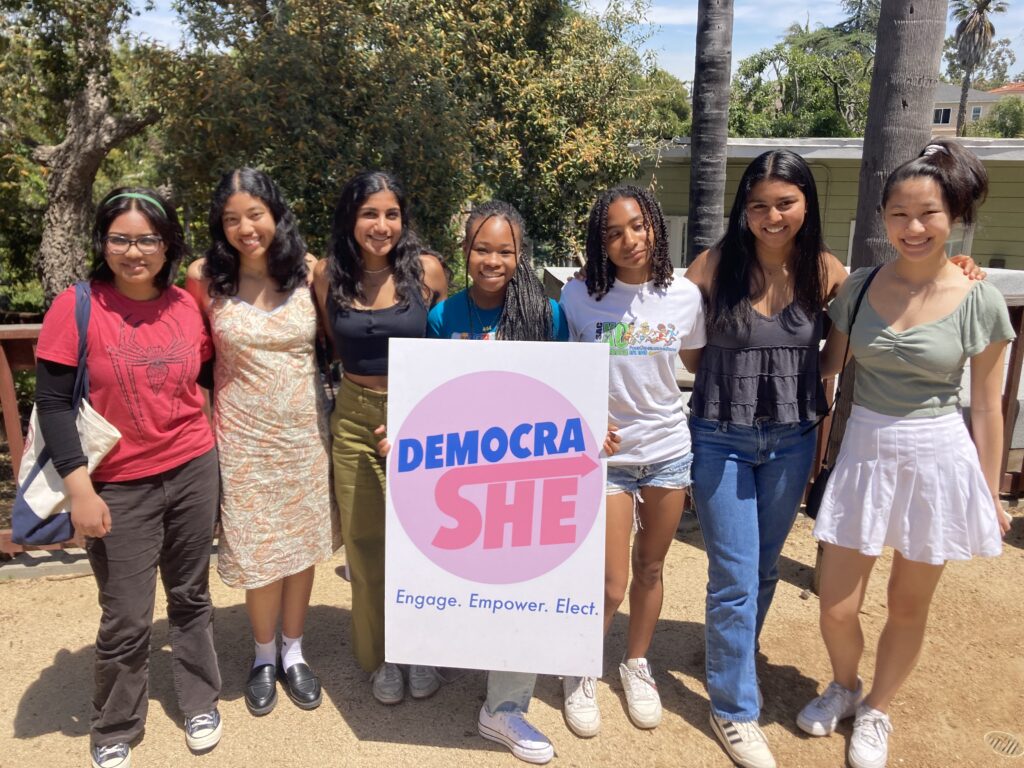
She convened a nine-person team of high school and college-aged young women who looked like America, and they built everything together. The name DemocraShe came from the girls. The logo. The website. The community agreements. The workshops. The curriculum.
“I joked to the girls that they all got master’s in social work,” she told me. She would bring her ideas and expertise, they would translate it into content that actually landed for young women, in their voice, from their perspective.
And then the model they built was peer-led from the start: you go through the program, and then you come back and lead it. Because it means something different to meet your inner best friend and hear that running for office is your birthright from a fellow high school girl than from an adult telling you what to think.
Why They Pay $15 an Hour (and Why That Matters)
When Sarah told people she was going to pay participants as a brand-new nonprofit, she says, they told her she had lost her mind.
She did it anyway. And it might be the most quietly radical part of the whole model.
Early political pipeline opportunities are almost always unpaid. Internships, campaign work, the entry points to a future in public service: they’re built on the assumption that you can afford to work for free. Which means the people who start on that pipeline are the people who can.
DemocraShe’s participants are 90% girls of color and 70% first-generation Americans. Many are working two or three jobs. Paying $15 an hour removes the barrier that would otherwise keep the most passionate, most motivated, most community-rooted young women out of the room.
But it does something else too. It teaches them, at 16 or 17, that their time has value. That they are allowed to be compensated for their work. That asking for money is not overreach, it’s appropriate. And when they grow up to be fundraising candidates or nonprofit leaders or executives, that lesson will already be wired in.
“Women are trained to volunteer,” Sarah said. “I love our volunteers. And I want high school girls to know that their time has value.”

The Nervous System Is the Curriculum
This is the part that surprised me most, and the part I think is most brilliant.
DemocraShe is not just a civics program. The social work half is equally essential, because Sarah understood early that teaching girls how government works does nothing if they can’t regulate the fear and self-doubt that show up the moment they try to use it.
So built into every session are evidence-based tools from trauma work, coaching, and neuroscience:
- Grounding: noticing physical contact with the earth to pull yourself out of the anxious part of your brain and back into your prefrontal cortex. Girls do it before campaign speeches. They start doing it before AP exams and driver’s tests and difficult conversations.
- The inner best friend: most of us know the inner critic well. The inner best friend is the antidote, an ally the girls identify and return to when self-doubt gets loud. Moms, Michelle Obama, Taylor Swift. What would she say about your right to use your voice?
- Savoring: consciously asking your brain to notice small beautiful things. The tool that carried Hafsa, the youngest elected official in Maryland, through a school board that was dismissive and discouraging, all the way to getting mental health counselors for her constituents.
- And threading through all of it: a Viktor Frankl paraphrase that I am still sitting with. “In between stimulus and response there is a space. In that space is choice, and in that choice is freedom.” DemocraShe’s whole project is helping young women find and widen that space.
DemocraShe Congress: What Bipartisan Could Actually Look Like
I want to tell you about the bill.
In a DemocraShe Congress session, a girl from California proposed that guns should be removed from everyone except police and military. A girl from Indiana said: that won’t fly here. Guns are part of our community. But she had watched a sophomore at her school get a gun, and her yes and was: age limits, and a license the way we have driver’s licenses.
A girl from Michigan said: yes to the bill, and I’d add mental health, and I don’t think assault rifles have any place in hunting or anywhere else.
Indiana said: I agree on assault rifles.
California said: I agree.
The bill that went to the DemocraShe floor for a vote incorporated all three perspectives, built across genuine difference, on one of the most contentious issues in American politics.
These were high school girls, in a Zoom breakout room, doing something our actual Congress rarely manages.
The “yes and” model, the nervous system regulation, the sisterhood culture, the cross-state representation: it all converges in that one example. And it gives me a lot of hope.

What She Found About Herself
In 2014, Sarah was told she would never work again. A serious autoimmune disease, a disability determination, a prognosis that said: this is your life now.
The skills she teaches DemocraShe girls: grounding, the inner best friend, savoring, the space between stimulus and response. Those are the skills she used to get back up. Step by step, toward something better.
“I can work again,” she said at the end of our conversation. And the work she is doing is going to ripple out for generations.
DemocraShe has a wait list seven times longer than its current capacity. 98% of graduates report teaching the skills to others in their community. Girls are launching youth conferences, becoming Obama fellows, getting elected to school boards, and going on to PhDs at Northwestern and Harvard.
And they’re taking the sisterhood with them.
How to Get Involved
Every girl in the country can access DemocraShe online. You can find the full curriculum on their website for free, apply to the 10-week program or one-day summer intensive, donate to support paid participation, or inquire about mentoring.
Find everything at democrashe.org. And connect with Sarah on LinkedIn.
This one is worth sharing widely. Forward it to a high school girl you know. Forward it to her mom. Forward it to her teacher. The future of leadership is being built right now, and DemocraShe is doing the building.



Be the first to comment