




There’s a particular kind of restlessness that a lot of high-achieving women know well. It’s not misery — it’s more like a quiet, persistent hum beneath the surface of a life that, by every external measure, looks exactly the way it’s supposed to. The job is good. The people are good. The paycheck is good. And still, something whispers: this isn’t it anymore.
If you’ve ever felt that — and pushed it down, because who are you to want more? — this conversation is for you.

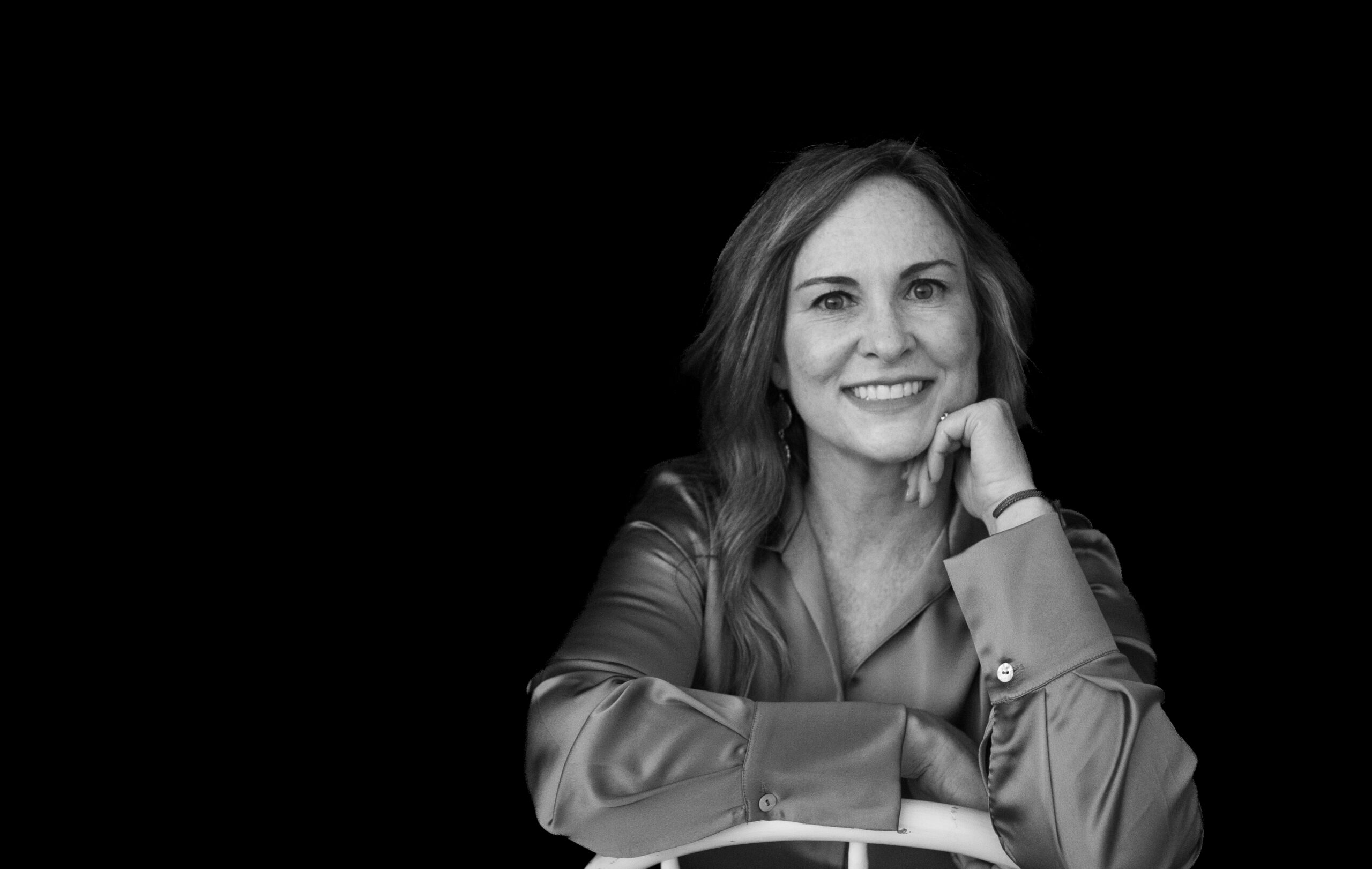
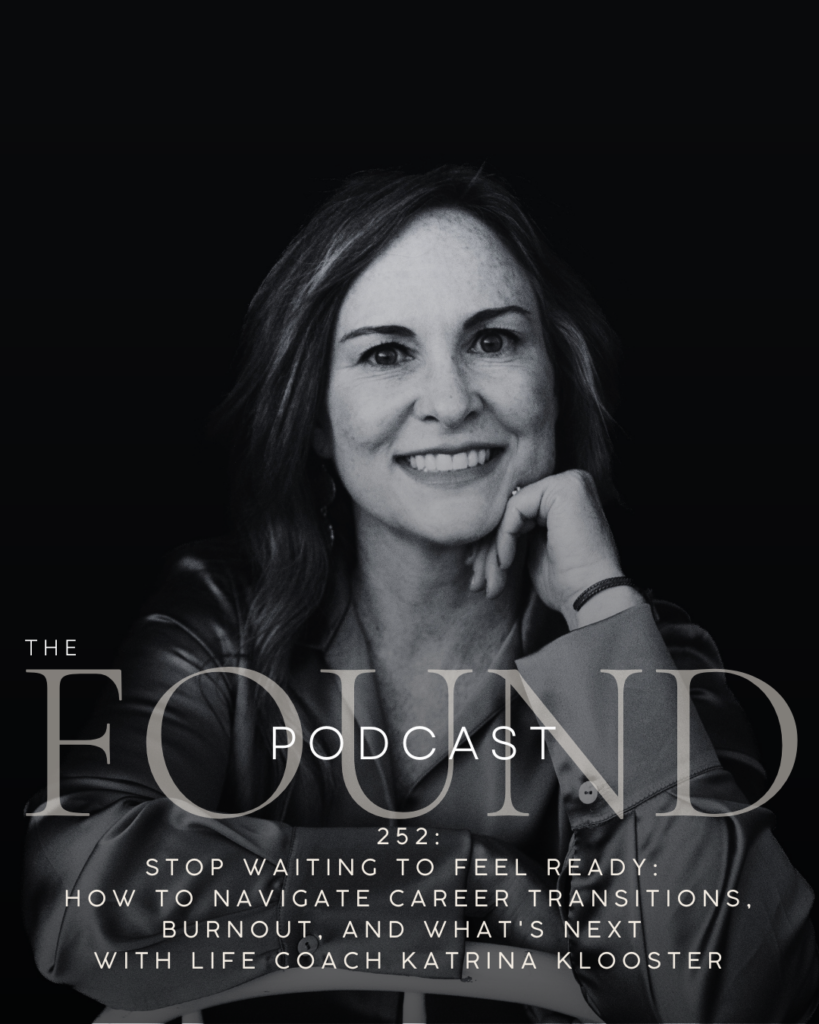
In Episode 252 of the Found Podcast, I sat down with Katrina Klooster, a career transition coach for women and my personal coach and one of the most grounded, wise women I know. Katrina is a life and leadership coach who specializes in helping high-achieving women navigate transitions — those in-between seasons when you’ve outgrown where you are but can’t quite see what’s next. And she came to this work the hard way: by living it herself.
From Social Work to Classrooms to Coaching: Owning a Non-Linear Path
Katrina’s career didn’t follow a tidy arc. She started in social work, spent nearly 15 years in education as a high school Spanish teacher and then an instructional coach, and eventually found her way into building her own coaching practice — a journey that involved a master’s degree she didn’t end up using the way she planned, a pivot to elementary school that turned out to be exactly the right stepping stone, and more than a few moments of wondering if she was making a mistake.
“I have what we’ll call a non-linear path,” she told me with a laugh, “and for a long time, I judged myself for that.”
She compares herself to her husband, who “was just born knowing he wanted to be a farmer” — a kind of certainty she’s never had. But what she’s come to understand, particularly as she watches the future of work evolve, is that her willingness to pivot, explore, and follow what fits isn’t a flaw. It’s a skill.

Burnout as a Catalyst (And What We’ve Normalized in Education)
The turning point for Katrina wasn’t a dramatic decision. It was shingles.
“I remember going to my principal and just sobbing,” she said. “‘I am too young — nobody my age gets shingles.’ And he told me two other people in the building had shingles. And I thought: we are normalizing this?”
That moment cracked something open. Katrina had spent years filling every gap — committing to more, serving on more, giving more — while an internal voice grew louder: this isn’t working. The burnout wasn’t just physical. It was her body making undeniable what her mind had been trying to explain away.
We talk a lot in this episode about what we’ve asked of educators — and of women in general — and how much of that self-sacrifice has simply become expected. Being available at 9 PM. Never sitting down. Wearing a dozen hats beyond the one in the job description. It’s not sustainable, and Katrina’s story is a powerful reminder that when your body starts talking, it’s worth listening before it starts shouting.
The Late-30s Awakening (You’re Not Imagining It)
One of the things I found most reassuring in this conversation was the acknowledgment that there seems to be something particularly potent about a woman’s late 30s. I’ve felt it. Katrina felt it. Many of the women she coaches are right in the middle of it.
It’s not the decade itself, exactly — it’s the vantage point. By our late 30s, we’ve had enough experience to sense when something doesn’t fit anymore, and enough runway ahead to imagine something different. We’re asking bigger questions. We’re using words like build and create. We’re starting to care less about what we’re supposed to want and more about what we actually want.
“I didn’t use those words nearly as often in my 20s or early 30s,” Katrina said. “But I keep coming back to: what are we building here? What are we creating? It gives me so much more agency.”
And for women in their late 40s and beyond? Katrina, who is 48, says she’s moving through a similar process again — and she thinks those catalysts (a relationship change, a loss, a birthday) are, as she puts it, “beautiful little gifts that jolt us out of autopilot.”
Golden Handcuffs, External Validation, and the Courage to Ask What You Actually Want
So what gets in the way for the high-achieving women Katrina works with?
A few things show up again and again. The belief, especially in rural communities, that this is all there is. The identity wrapped up in a title or a degree — the sunk cost of years of education and climbing. The lifestyle that expanded to meet the income, making change feel financially impossible. And underneath all of it, the exhausting habit of measuring success from the outside in.
“A lot of my clients have a PhD or a master’s degree,” she said. “They’ve given so much time and money to get where they are. And they also know this is not where they want to be anymore.” The work, she says, is helping them let go of the shame around that — and start getting curious about what they actually want, without judgment.
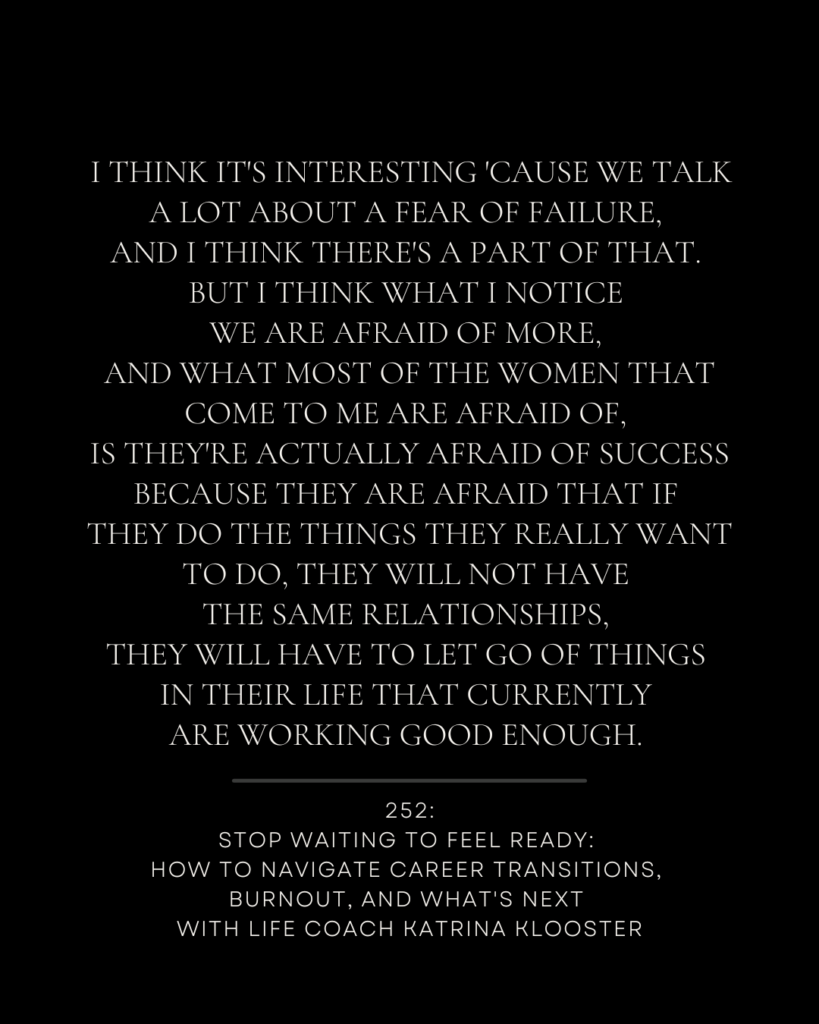
One of the things she said that stopped me cold: most women aren’t afraid of failure. They’re afraid of success. Because success might mean changing the relationships they have. It might mean outgrowing the version of their life that currently works “good enough.” And that’s a real loss worth grieving.
“There is a grieving process in growth,” Katrina said, “that we don’t talk enough about.”
What It Actually Looks Like to Do This Work
Katrina doesn’t sugarcoat coaching. She described it to me as compassionate — and also as fighting for your bigger dreams alongside you. It involves confronting your own insecurities, having more honest conversations (with yourself and with the people in your life), and being willing to feel uncomfortable long enough to get somewhere new.
I shared a moment that has stuck with me: I’d giggle when I said something that felt like a big dream. And Katrina called it out immediately. “What’s that giggle about? Do you feel like that’s not attainable?” That’s the work. That’s what having the right person in your corner does — they name the thing you were hoping they wouldn’t notice.
If you’re wondering whether coaching is right for you, Katrina’s advice is simple: look at what you want to create or do differently, and find someone who has done that. Not someone who has all the answers — someone who’s in it themselves, still growing, still asking the questions.
Find Katrina
Katrina works with women in life and career transitions, and with leaders and organizations on leadership development. You can find her at katrinaklooster.com or send her a message on Instagram. She’d love to hear from you — and she means it.
And if this episode resonated with you, please share it with someone who needs it. Leave a review. Subscribe if you haven’t yet. This work matters, and the more women we can pull into these conversations, the better.





Be the first to comment