



Some of the most powerful leaders you’ll ever meet will never appear as a verified influencer in your newsfeed.
They’re not building personal brands. They’re not running ad campaigns. They’re not even thinking about “visibility.”
They’re just quietly doing the work.
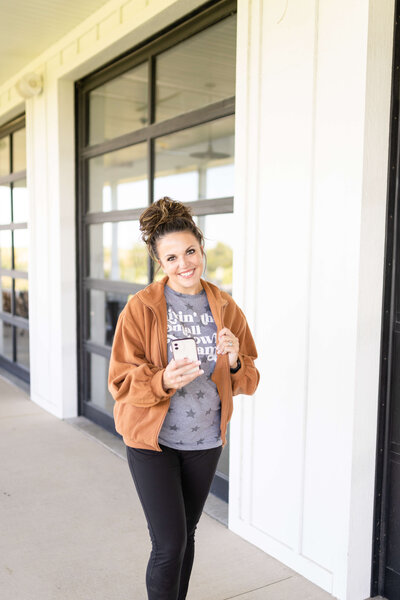
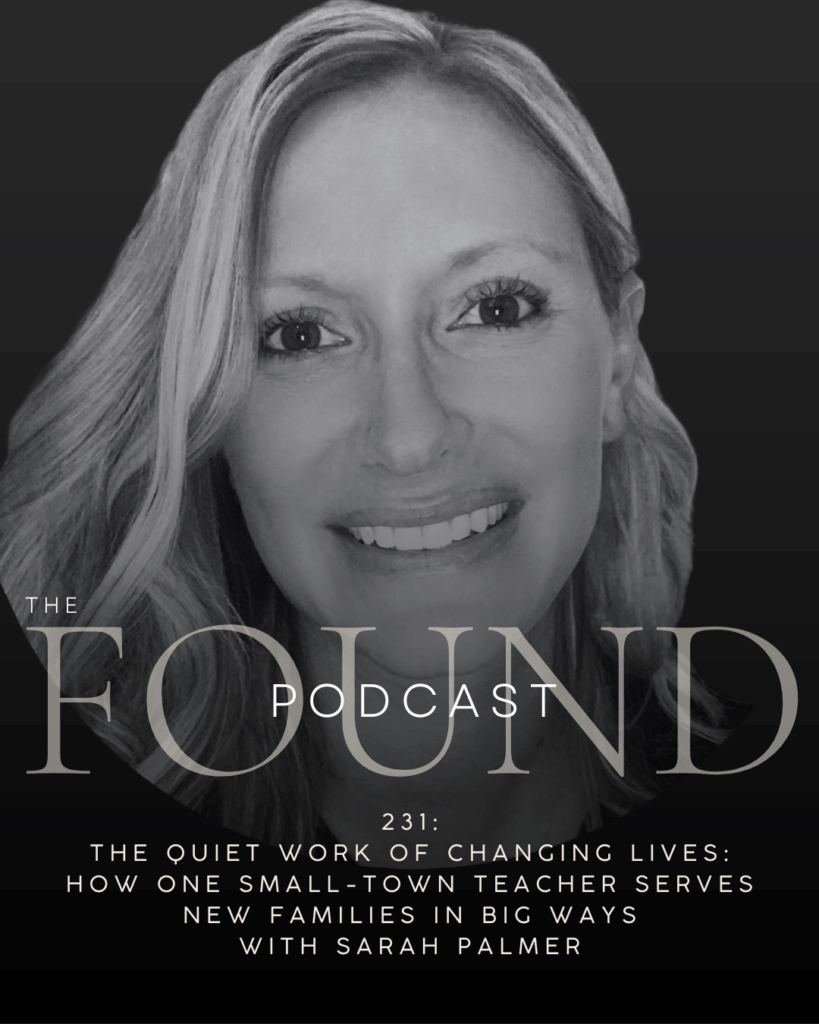
This week on The Found Podcast, I sat down with one of those people: my friend, former colleague, and incredible educator, Sarah Palmer.
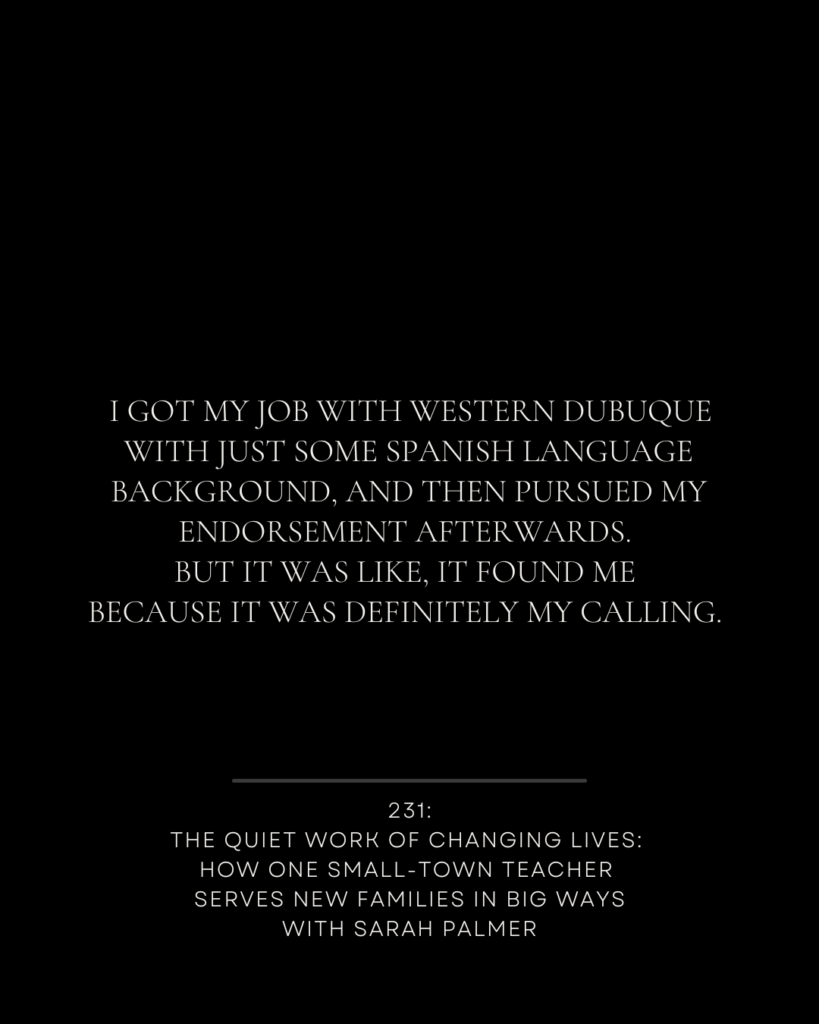
Sarah teaches English as a Second Language in the Western Dubuque Community School District here in Eastern Iowa. On paper, her job is “language instruction.” In practice, it’s so much more.
She’s the first point of contact for families who arrive with almost nothing.
She’s the person students trust when everything else feels foreign.
She’s the connector between new families and the community resources they need to survive and thrive.
And she’s doing it all quietly, without fanfare.
From a Handful of Students to a Global Classroom
When Sarah started 18 years ago, she had just a few English learners on her roster. Today, she and her colleagues each serve 40+ students, representing countries and cultures from all over the world.
- Mexico
- Guatemala
- Venezuela
- El Salvador
- Nicaragua
- Puerto Rico
- Pakistan
- India
- South Africa
- Greece
- Albania
In rural Iowa.
That diversity means more than vocabulary lists and grammar lessons. It means understanding cultural norms, religious practices, dietary needs, and the trauma many students and families have lived through before they ever arrive at school.
And in a small district, it also means something beautiful: Sarah gets to teach the same kids year after year. She has their brothers. Their cousins. She gets invited to baptisms, quinceañeras, family celebrations.
Slowly, the teacher becomes family.
When School Becomes the First Safe Place
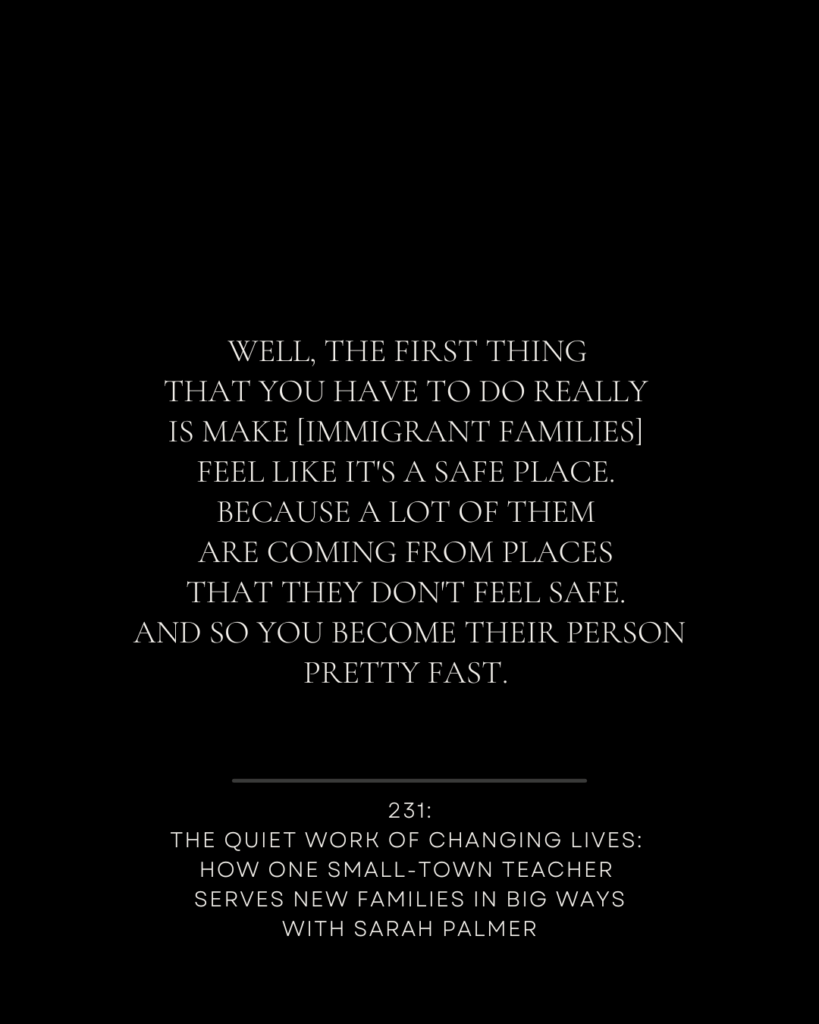
For many families—especially those arriving as asylum seekers or refugees—the public school is the first place they sit down with someone from the local community.
If you’re willing to leave your children with someone all day, you have to trust them.
That trust opens the door to other questions:
- Where do we get food?
- Where can we find furniture?
- How do we see a doctor, a dentist, a counselor?
- Who can help us with coats, shoes, winter gear?
This is where the job description ends and the real work begins.
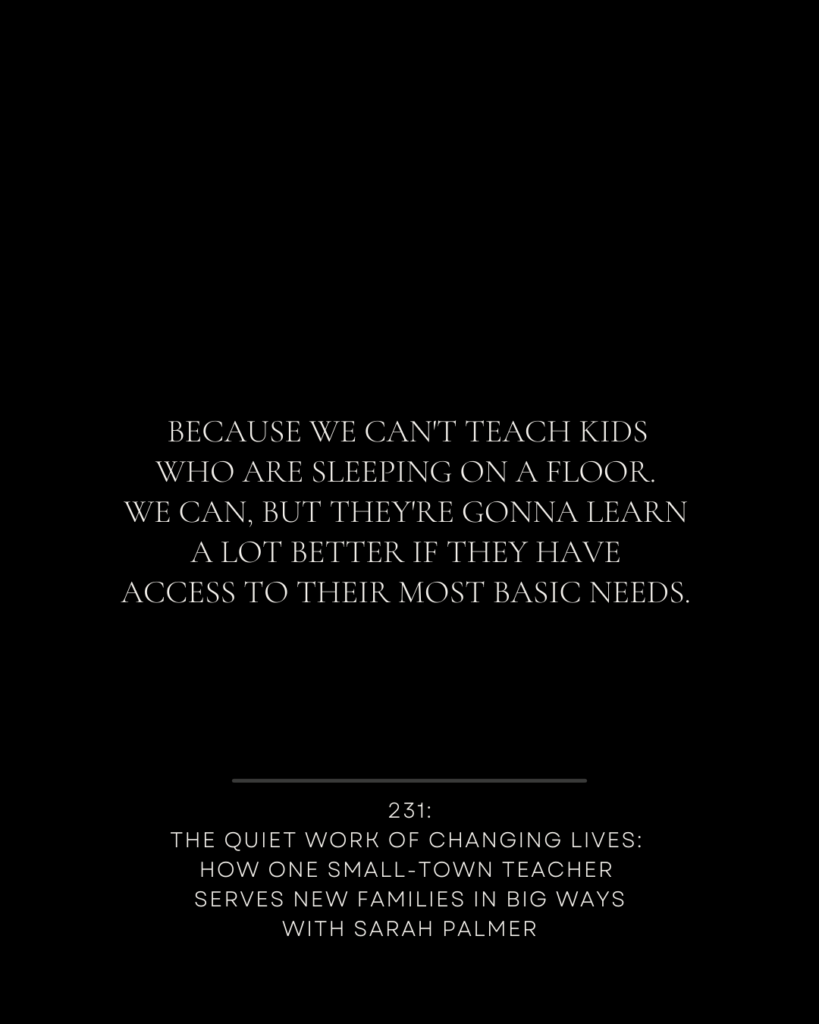
Sarah is very clear: she can’t personally buy beds, stock pantries, or solve every problem.
But she can connect families to people and organizations who can help: Resources Unite, local food pantries, open closets, angel trees, community foundations, neighbors with extra bikes in their garage.
She describes herself as being “in the trenches” and “just the connector”—but anyone listening can hear the weight and the heart behind those words.
One Gift, a Whole New Trajectory
My favorite stories in this conversation are the specific, concrete examples of how one act of service changes everything.
Like the middle schoolers who didn’t have bikes. In a small town, a bike is independence. It’s a way to get to the pool job, to the park, to a friend’s house.
Sarah put a note on Facebook. One woman Venmo’d her $250 and said, “Get some bikes.”
Instead of going straight to Walmart, Sarah hunted on Marketplace and at garage sales.
That $250 turned into eight bikes.
Kids who would’ve been stuck inside small apartments all summer suddenly had wheels—and with them, freedom.
Then there’s the family from Nicaragua: four kids, one car, living in an apartment they couldn’t really afford, with no transportation options in a rural area.
Through Resources Unite and the BVM sisters, they were gifted a used Corolla from a retired sister.
That car allowed them to:
- Move into a more affordable, larger home with a yard
- Save money
- Eventually buy a second vehicle
- Take the next step in building a life here
One car didn’t “solve everything.” But it completely changed their trajectory.
Built for Service—and Raising the Next Generation
Toward the end of the episode, Sarah shared something that stopped me in my tracks: the story of her own parents.
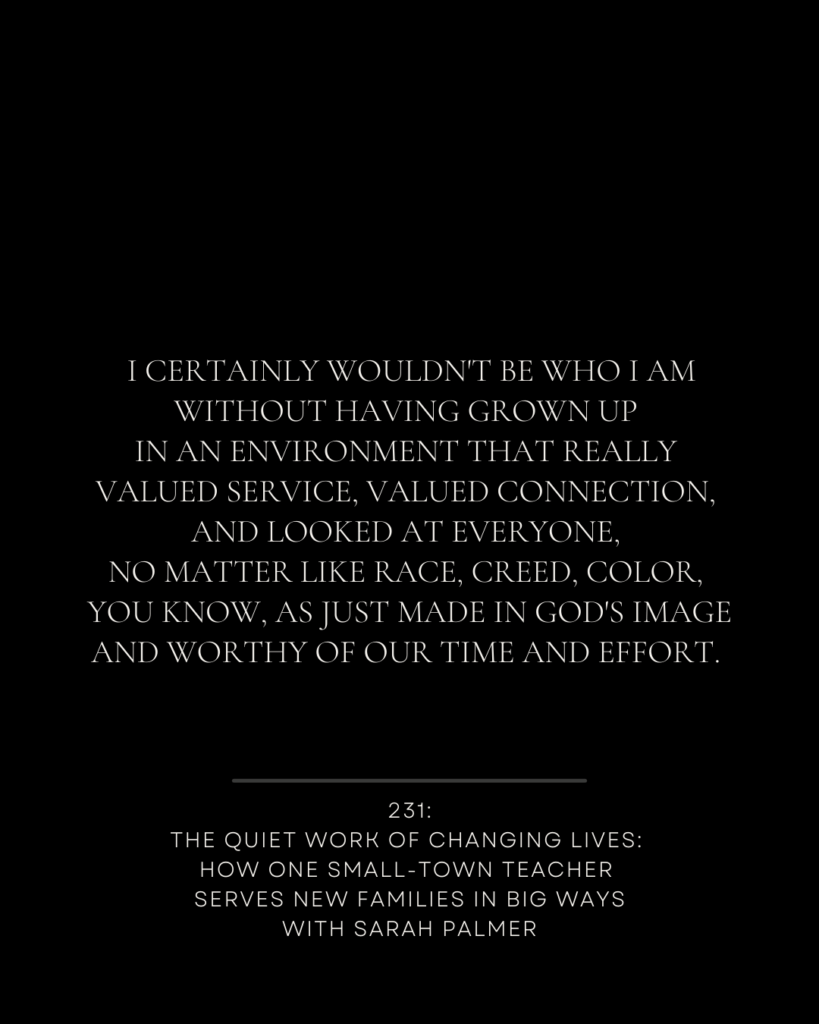
Her mom, a teacher. Her dad, a realtor who quietly served refugee families, sometimes even personally financing homes to help them get started.
Their home was a place where people in crisis came to live—families fleeing domestic abuse, teens in turbulent situations, people needing a safe place to land.
“We grew up seeing everyone as made in God’s image and worthy of our time and effort,” she said.
Now, she’s passing that on to her boys.
“When we go places to deliver things, I tell them, ‘This is our church. This is what we’re talking about when we read the Bible at night.’”
Service, for Sarah, isn’t a side project.
It’s a way of being in the world.
What This Means for Us
You and I might not be ELL teachers.
We might not be in a position to give someone a car.
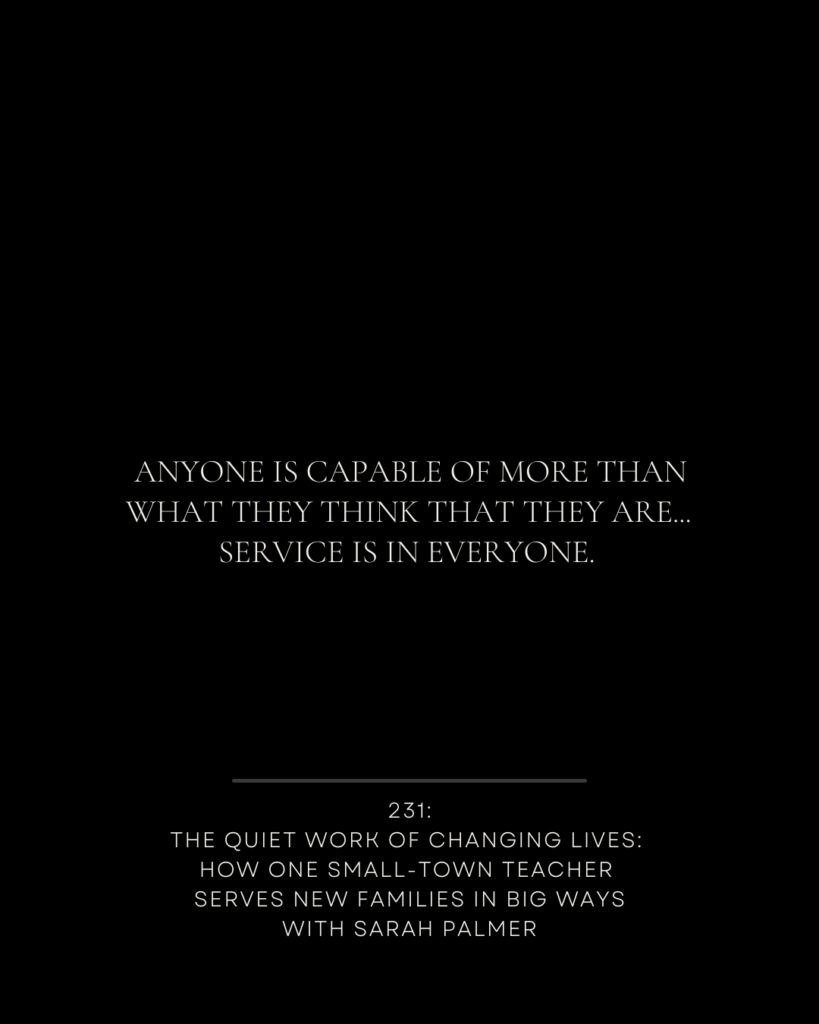
But Sarah’s story reminds us that there is always something we can do:
- Donate a gently used suitcase, bike, or bed
- Ask your local school, food pantry, or church what they actually need
- Offer rides
- Volunteer in an English class
- Start or join a small social justice or outreach group
- Be the connector between a person and a resource
Your role might be big and visible.
It might be quiet and behind-the-scenes.
Either way, it matters.
Reflection Question
Where in your community is there a need that keeps tugging at your heart—and what is one small, concrete action you could take this month to help meet it?
You don’t have to be the face of a movement.
You don’t have to fix everything.
You just have to be willing to show up, as you are, with what you have.
Then listen to my interview with Sarah in its entirety in Episode 231 of The Found Podcast with Molly Knuth, now streaming on iTunes and Spotify.





Be the first to comment